KINETICO WATER BLOG
White Buildup on Faucets? Hard Water Scale in Coachella Valley Homes
Why mineral deposits keep returning and how testing, softening, and proper maintenance can help
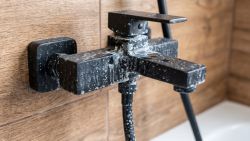
White crust around a faucet, chalky shower glass, and spots on freshly washed dishes can make a clean home look neglected. When the residue keeps returning, the problem may begin with the water rather than your cleaning routine. Hard water contains dissolved calcium and magnesium that can leave deposits as water evaporates or is heated. For homeowners in Palm Desert, Palm Springs, La Quinta, Indio, and surrounding Coachella Valley communities, these signs are a practical reason to check household water hardness. Appearance alone cannot identify every water issue, and not every cloudy glass has the same cause. A professional water evaluation helps distinguish mineral buildup from detergent residue, permanent glass damage, or equipment problems. V & C Water Solutions can test your water and recommend an appropriate Kinetico system or service plan based on the results, your plumbing, and how your household uses water.
What Causes White Buildup on Faucets, Shower Glass, and Appliances?
Start with the water, not a stronger cleaner.
Hardness is primarily a measure of dissolved calcium and magnesium. These minerals can be present in treated municipal water as well as well water. A water supply can meet drinking-water requirements and still leave troublesome scale; hardness and drinking-water safety are different questions. The USGS explains how hardness minerals affect household water.
Why the residue returns.
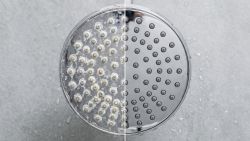
When a droplet dries, dissolved material can remain on the surface. Repeated wetting and drying allows deposits to accumulate around faucet bases, aerators, showerheads, and glass. Heating hard water can also encourage calcium carbonate deposits, which is why water heaters and hot-water appliances deserve attention. Cleaning removes existing residue from a surface, but the next use brings another supply of minerals if the incoming water remains hard.
Common places to look.
Check faucet outlets for a pale crust, shower glass for spots that return after cleaning, and sinks or tubs for a film around frequently wet areas. Hardness minerals can also react with soap and contribute to soap scum. In the kitchen, inspect glassware and removable appliance parts according to their care instructions. These observations help describe the problem to a water professional; they do not replace testing or an appliance diagnosis.
Cloudy dishes do not always mean the dishwasher is failing.
Mineral film, excess detergent, rinse-aid settings, and permanent glass etching can produce similar complaints. If cloudiness remains after appropriate cleaning, ask the appliance or glass manufacturer how to distinguish removable deposits from surface damage. Replacing a dishwasher before checking the incoming water may leave the underlying issue unresolved.
Scale can matter beyond appearance.
Deposits can restrict small openings and affect water-using equipment. A change in flow, noise, heating performance, or appliance operation should also be evaluated for plumbing or mechanical causes. A water softener is not a repair for a blocked pipe, damaged fixture, or failing water heater. Existing equipment may need manufacturer-approved maintenance even after water treatment is installed.
Test the water actually reaching your home.
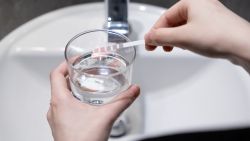
A hardness test gives a more useful starting point than comparing your fixtures with a neighbor’s. Ask for the measured result and its units, then explain where buildup occurs and whether you already have treatment equipment. If a softener is installed, comparing untreated and treated water can help determine whether it is reducing hardness. A basic in-home assessment addresses specific characteristics; it does not certify that water is free of every possible contaminant. Concerns requiring laboratory analysis should be discussed separately.
For another common local concern, read why tap water can smell or taste like chlorine. Chlorine odor and mineral scale require different treatment decisions.
How to Reduce Recurring Scale With the Right Water Softener and Service
Treat hardness before it reaches household fixtures.
A conventional ion-exchange water softener reduces calcium and magnesium as water passes through its resin. A properly selected and functioning whole-home system can reduce the hardness minerals reaching connected showers, sinks, and appliances, helping limit new mineral buildup. Regeneration restores the resin’s ability to keep treating water. System selection should account for tested hardness, household demand, plumbing capacity, and the locations you want treated.
A filter and a softener do different jobs.
A standard sediment filter catches particles; dissolved hardness minerals generally pass through it. Carbon filtration is commonly selected for issues such as chlorine taste and odor, rather than conventional water softening. A kitchen reverse-osmosis system treats water at a particular outlet and does not automatically protect every shower or appliance. Some homes benefit from more than one technology. Our softener, filtration, and reverse-osmosis comparison explains the differences.
Choose equipment around your actual water use.
V & C Water Solutions is an Independent Authorized Kinetico Dealer serving the Coachella Valley. We can evaluate your water, review installation options, and explain which system fits your goals. Kinetico offers non-electric, demand-operated softening options; the appropriate model depends on the home and the measured conditions. Do not assume that equipment chosen for another property will deliver the same result in yours. Learn more about our water testing, installation, and service options.
What if you already have a softener?
New spotting is a reason to check performance before replacing the system. Confirm the bypass position and salt level according to your owner’s manual, then arrange service if hardness is returning. An inspection can evaluate settings, regeneration, the brine system, resin condition, and whether household demand has changed. Ask which fixtures are connected to treated water; an untreated line can continue producing scale even while the softener is working elsewhere.
Will soft water remove old deposits immediately?
No immediate cleanup should be assumed. Reducing incoming hardness helps limit new buildup, but existing scale, glass damage, or mechanical problems may still need attention. Follow fixture and appliance care instructions, and have a qualified professional assess persistent flow or heating issues. Choose cleaning products that are compatible with the surface; aggressive treatment can damage some finishes.
Is a salt-free scale device the same as a softener?
No. Some devices are intended to reduce scale formation without removing calcium and magnesium. They do not create conventionally softened water, and results depend on the technology and application. Ask whether the proposed equipment removes hardness, changes scale behavior, or addresses another concern so its purpose matches your expectations.
Does white residue prove the water is unsafe?
No. Visible mineral deposits do not establish the safety of a water supply. Hardness testing helps investigate scale; other concerns may require different testing. If the water changes suddenly, check with your water provider and describe the change to your water professional.
Schedule a free water test with V & C Water Solutions.
Homeowners in Palm Springs, Palm Desert, Rancho Mirage, Cathedral City, La Quinta, Indio, and nearby communities can request a water test or consultation. Call (951) 405-4487 to discuss recurring deposits, an existing softener, or a new Kinetico installation. Bring your questions about scale, cleaning, household demand, and maintenance so the recommendation addresses the problems you actually want to solve.
Further reading: Kinetico explains scale and limescale, water softening, and available softener systems.